



The idea of in-flight amusement has experienced a substantial change, moving from shared plane displays to individual on demand systems https://cashorcrash.uk/. Currently, a new category is developing, blending interactive gameplay with the potential for tangible rewards, directly available from a traveler’s own device. Cash or Crash Live stands as a leading illustration of this new wave, presenting a live quiz show adventure designed for engagement during air travel. This analytical analysis looks at the mechanics, attractiveness, and operational factors of this leisure style in the particular framework of UK airspace and for the UK flying population. This offering aims to deliver a special diversion, blending the excitement of a real-time contest with the ease of onboard connectivity, producing a distinct offering for carriers aiming to upgrade their online traveler trip.
The Evolution of In-Flight Entertainment Systems
The history of in-flight entertainment is a testament of technological advancement and shifting passenger expectations. For decades, the experience was largely passive, defined by a single film projected onto a bulkhead screen, with audio transmitted via unwieldy headsets. The introduction of seatback screens marked a revolution, offering passengers a degree of control and choice, with selections of films, television series, and music. This hardware-dependent model, however, entailed significant weight and maintenance costs for airlines. The current paradigm shift moves towards ‘bring your own device’ (BYOD) systems, using the passenger’s own smartphone or tablet as the primary entertainment portal. This shift decreases aircraft weight, eases airline logistics, and enables more personalised and updateable content. It is within this BYOD ecosystem that interactive applications like Cash or Crash Live establish their niche, delivering a dynamic, participatory form of entertainment that static video libraries cannot provide, matching modern expectations for interactive digital engagement.
Moving from Passive Viewing to Active Participation
The shift from passive viewing to active participation is a critical evolution. Traditional entertainment options are intended for consumption, a way to spend time. Interactive applications, conversely, necessitate engagement, decision-making, and emotional investment from the user. This active model can alter the perception of time during a flight, notably on shorter UK domestic or European routes where a full-length film may not be practical. The psychology of participation implies that a passenger involved in a game or interactive experience is more likely to be absorbed, potentially reducing the subjective experience of flight duration. For airlines, this signifies an opportunity to increase perceived value and passenger satisfaction without significant additional hardware investment. The success of such models, however, hinges on intuitive design, reliable connectivity, and content that is engaging enough to motivate participation over more leisurely, traditional options.
Grasping the Cash or Crash Live Game Mechanics
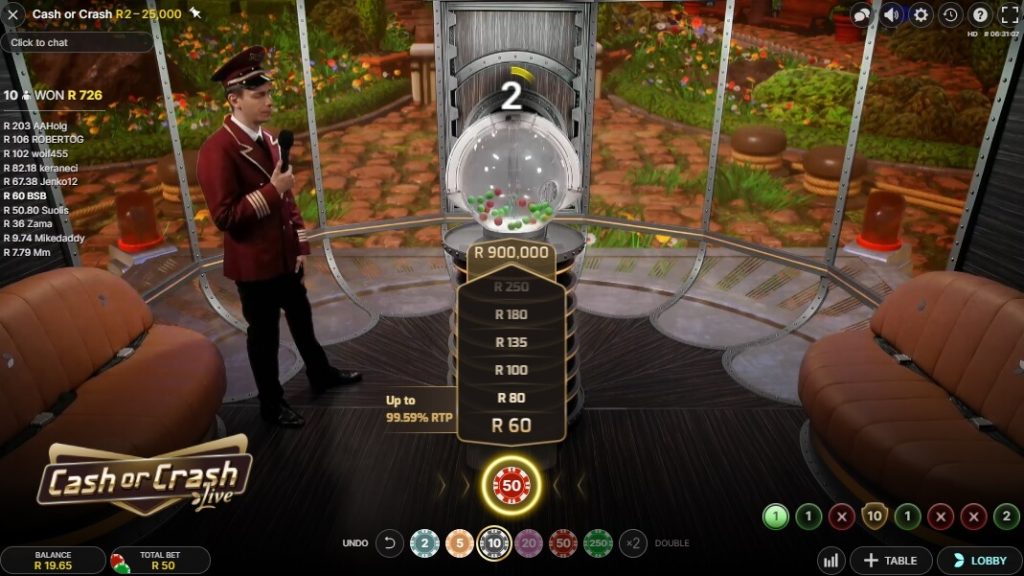
Cash or Crash Live operates on a straightforward yet suspenseful premise, modelled after a live game show. Participants join a live session, usually using in-flight Wi-Fi to link their device to the game server. The core mechanic involves a virtual multiplier that grows incrementally as a visual representation, such as a rocket or balloon, moves on screen. The central decision for the player is when to ‘cash out’ and obtain the accumulated multiplier, which translates to a potential reward. The inherent risk is that the game can ‘crash’ at any random moment, resetting the multiplier to zero for any players who have not cashed out. This generates a classic tension between greed and caution. The live element is crucial, as all participants in that session encounter the same multiplier curve and crash point, fostering a sense of communal anticipation and competition, albeit remotely, with other passengers on the same flight or network.
The Part of Random Number Generators and Fairness
The trustworthiness of a game like Cash or Crash Live is fundamentally dependent on its Random Number Generator (RNG). The moment of the ‘crash’ is decided by this algorithm, which must be provably fair and transparent to maintain user trust. Providers often use cryptographic techniques to allow for the verification of each round’s outcome, guaranteeing the crash point was not manipulated after the fact. For the UK audience, which is used to stringent regulations around gambling and gaming via the UK Gambling Commission, the separation between a game of skill and a game of chance is paramount. Cash or Crash Live, in its standard form accessible in-flight, usually operates as a free-to-play game with non-monetary rewards or promotional credits, deliberately differentiating itself from real-money gambling models. This positioning is crucial for its adoption by airlines and its accessibility to a broad passenger demographic without age or regulatory restrictions.
Comparative Analysis with Standard In-Flight Options
When positioned alongside conventional in-flight entertainment, Cash or Crash Live occupies a particular niche. It is not a close competitor to film or television series collections, which fulfill a different need for narrative immersion and relaxation. Instead, it complements them by providing an alternative for passengers looking for stimulation and interaction. Relative to pre-loaded puzzle or arcade games often present on seatback systems, the active, communal, and high-stakes (albeit virtual stakes) nature of Cash or Crash Live offers a different adrenaline response. Its value proposition for airlines is diverse: it can serve as a low-cost content addition that updates frequently, produces operational data on passenger engagement, and functions as a likely differentiator in a rivalrous market. For the passenger, it widens the menu of accessible activities, supplying a selection that can be tailored to mood and flight duration.
Critical Assessment of Sustained Viability
The long-term viability of a singular application like Cash or Crash Live hinges on its ability to evolve and retain novelty. The core game mechanic, while captivating, threatens becoming monotonous without changes, new risk scenarios, or developing reward structures. Its success is also reliant on the broader acceptance of dependable, and optimally, free, in-flight Wi-Fi across UK fleets; a paid connectivity barrier markedly restricts the addressable audience. Furthermore, it must continually defend its place in a passenger’s personal device ecosystem, vying not only with other in-flight options but with pre-downloaded content and offline apps. For continued relevance, it may necessitate to grow into a platform offering a collection of different live interactive experiences, maybe including trivia, prediction markets on flight details, or other socially-connected games. Its endurance will hinge on showing clear value to both airlines—through enhanced passenger satisfaction metrics and engagement data—and to passengers, through uniform, enjoyable, and fulfilling user experiences.
Analysing the Commuter Involvement Model
The involvement model of Cash or Crash Live is cleverly designed to leverage several behavioural triggers. The live, real-time nature produces urgency and a fear of missing out (FOMO), prompting passengers to enter a session as it begins. The simple ‘cash out’ action offers a direct sense of control, a strong psychological lever in an setting where passengers have little control over their travel. The escalating multiplier plays on anticipation and risk-reward evaluation, a cognitive process that can be deeply absorbing. Furthermore, the potential for recognition, such as a leaderboard showing the top cashed-out multipliers from a flight, brings a social competitive element. For the UK traveller, who may be journeying for business or leisure, this model presents a quick, engaging mental pause that is more interactive than reading or watching a film, likely increasing overall satisfaction with the flight experience by giving a unforgettable and novel activity.
Demographic Appeal and Perception of Time Passing
The allure of such games likely changes across passenger demographics. Younger, digitally-native travellers may be immediately pulled to the interactive, game-show format, while others may consider it with curiosity. Its success lies in its simplicity; the core decision is easy to grasp regardless of gaming experience. A significant alleged benefit is the alteration of time-passage awareness. Engaging in a series of short, tense rounds can make time feel as though it is passing more swiftly, a valuable effect on held-up flights or during the en-route phase of a journey. This psychological escape can be particularly effective on the densely packed short-haul routes typical in UK and European air travel, where cabin space is cramped and traditional entertainment options may feel limited. It gives a focused activity that requires minimal physical space but considerable mental attention.
Future Anticipated Developments and Airline Partnerships
The trajectory for dynamic in-flight entertainment like Cash or Crash Live heads towards greater integration and individualisation. Future developments could see the game connected directly to airline loyalty systems, with multipliers converting to air miles or lounge access passes. Themed versions tied to destinations or airline brands might enhance the marketing synergy. Technologically, integration with the aircraft’s inflight system could allow for gentle notifications or smooth login via the passenger’s booking reference. As connectivity technologies like Low Earth Orbit (LEO) satellite internet become more prevalent in aviation, enabling higher bandwidth and reduced latency, the potential for even more complex live multiplayer experiences increases. For UK airlines, strategic partnerships with established entertainment providers might become a element of their digital roadmap, aimed at attracting specific passenger segments and increasing ancillary revenue opportunities through sponsored rewards or premium game features.
Regulatory and Practical Aspects in UK Airspace
Managing any form of engaging service within the aviation environment demands careful navigation of legal and operational structures. In the UK, the primary consideration is the clear separation from real-money gambling, which is heavily controlled. Cash or Crash Live, when provided as a free promotional game with prize draws, vouchers, or air miles as rewards, functions outside gambling legislation. Airlines must verify their setup adheres with advertising standards and does not confuse passengers about the nature of the rewards. Practically, the service must be designed for offline resilience or minimal data usage to account for connectivity black spots, common during certain flight phases. Furthermore, user interface design must consider the cabin environment: screen brightness that is changeable for night flights, intuitive controls, and clear status indicators. These aspects are crucial for a service that strives to be a smooth part of the in-flight experience rather than a cumbersome addition.
Incorporation with UK In-Flight Connectivity Services
The sustainability of real-time interactive gaming like Cash or Crash Live is directly connected to the presence and reliability of airborne Wi-Fi. Across UK airlines, the implementation of internet services has been progressive, with many carriers on short-haul and long-haul fleets now offering some type of online connectivity, often marketed as ‘Wi-Fi in the sky’. The service models vary, including complimentary text plans to subscription plans for broader browsing and streaming. For a smooth Cash or Crash Live experience, a reliable, low-latency link is recommended, though the bandwidth needs are generally low compared to video streaming. The integration process for the operator involves working with the media vendor and ensuring the game’s data flow is either allowed or functions efficiently given the capacity of the satellite or ground-based network. This technical symbiosis is essential for delivering a bug-free experience that enhances, without causing frustration, the passenger journey.
Final Word: A New Space in Sky Entertainment
Cash or Crash Live is a cutting-edge breakthrough in the onboard entertainment landscape, especially tailored for the connected, engaging expectations of contemporary flyers. Combining the suspense of a game show with the accessibility of personal device technology, it carves out a distinctive niche that complements rather than displaces traditional pastimes. For UK flyers, it provides a compelling diversion that can change time sense and bring a touch of thrill to the journey, if it is enabled by strong onboard internet. Its working model, carefully separated from real-money gambling, allows for wide reach. While its long-range future will rely on continuous innovation and deep airline partnership, it now serves as a remarkable example of how the passenger experience in UK airspace is evolving, transitioning from a purely service-oriented journey to an opportunity for tailored digital interaction and corporate engagement at 30,000 feet.